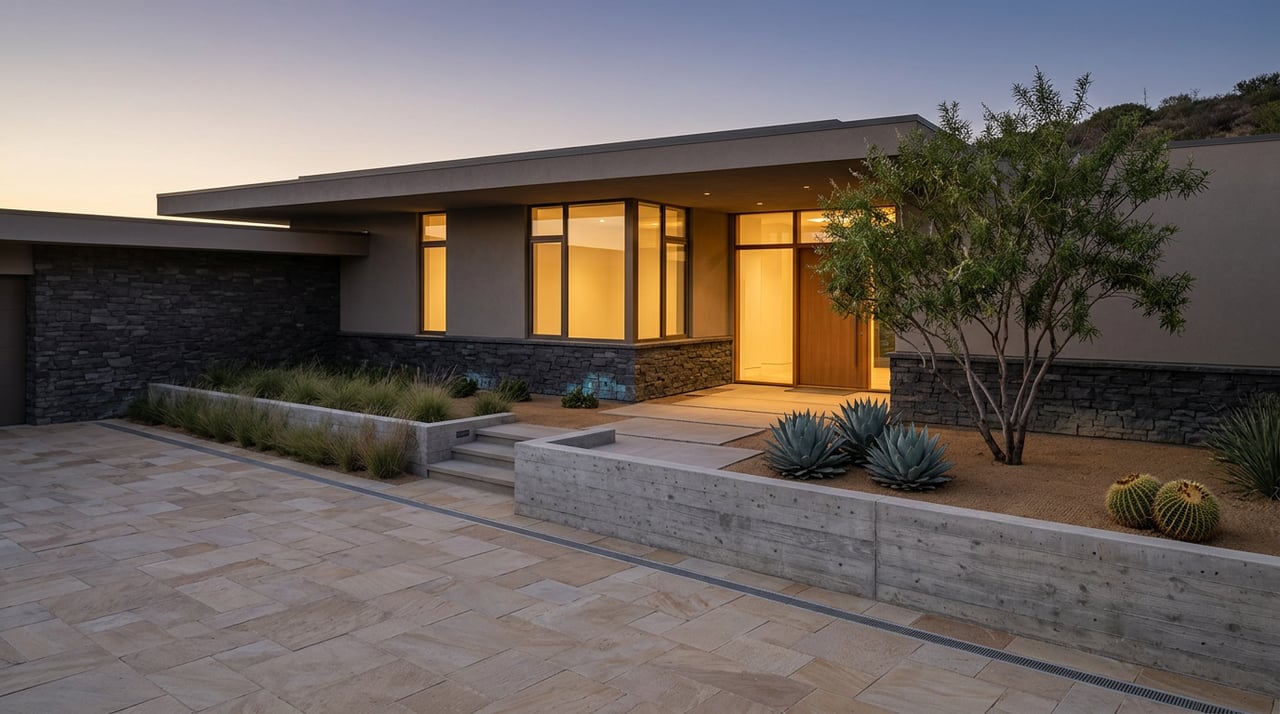
When Ascaya's homesites first went on sale, the developer drew a hard line for buyers worried about builder speculation ruining the neighborhood's character. Homes would be individually commissioned, not thrown up on spec, and every design would answer to an Architectural Review Committee before anyone broke ground. That promise shaped how the community sold itself for years.
By the time the developer released its final batch of homesites, that same promise had quietly changed. In a 2025 interview about the last 58 lots coming to market, development lead Sam Brown told the Las Vegas Review-Journal the team was planning to build a spec house on one of them. The community that sold itself on the absence of speculative building now had the developer doing exactly that, on the very lots it had spent years holding back.
That reversal is the reason a bottom-funnel guide to Ascaya matters more than a pricing chart. If the rule that defined the neighborhood's identity can move once inventory gets scarce, the smaller rules buyers rely on when budgeting a custom build can move too. And in Ascaya, the rule that catches people off guard isn't the design guideline itself. It's the order in which approvals happen, and what that order costs while you wait.
Two Approvals, One Clock
Most buyers assume the sequence runs: buy the lot, hire an architect, file for a city permit, build. In Ascaya it runs differently. The HOA's Architectural Review Committee has to sign off on your design before the City of Henderson will accept a building permit application through its DSC Online Portal. HOA approval and municipal permitting are two separate reviews, and the private one comes first.
Here's roughly how the two stack up:
| Stage | Who approves | Typical duration |
|---|---|---|
| Design submittal and review | Ascaya Architectural Review Committee | 60 to 120 days, up to 180 with revisions |
| Permit application | City of Henderson (DSC Online Portal) | 2 to 4 weeks once submission is complete |
| Corrected resubmittals | City of Henderson | About 2 business days to re-enter review |
The city's own guidance for homeowners is clear that incomplete submissions restart the clock, and the same discipline applies on the HOA side. A design that comes back with requested changes doesn't just add time to the ARC review, it pushes the entire municipal filing further out, because the city won't look at plans the HOA hasn't cleared yet.
The Promise That Already Moved
That two-gate structure is worth knowing on its own, but it matters more once you understand that the rules governing what gets approved aren't fixed. When Ascaya opened its lots for sale, the developer told the Review-Journal the goal was to keep it "a community for homeowners," with no speculative homes allowed. That single-owner, custom-only positioning was part of the pitch for early buyers who wanted a neighborhood free of builder-grade spec product.
Years later, with only 58 developer-owned homesites left to sell, the same publication reported that the development team planned to build a spec house on one of them. The shift makes sense from the developer's side. Moving the final lots matters more than preserving a purity pledge once the finish line is in sight. It doesn't make the shift any less real for a buyer who assumed the "no spec homes" language on an older brochure or agent website still describes current policy.
The practical takeaway isn't that spec homes are now common in Ascaya. It's that community rules tied to inventory position, not just design taste, can move as the developer's incentives change. Anyone relying on a rule they read secondhand should confirm it directly with Ascaya's HOA or sales office before it becomes part of their build budget or timeline assumptions.
The Minimum Everyone Signs but Rarely Reads
The same caution applies to the community's size requirements. On all but one street in Ascaya, homes must meet a 4,500 square foot minimum, a figure Brown confirmed directly to the Review-Journal. Most buyers never bump against that floor because the average completed home in the community runs well past 8,000 square feet, according to the same interview. But the minimum still matters for anyone assuming they can build smaller and more efficient to control cost. That flexibility doesn't exist on most streets, and finding out mid-design, after the architect has already drawn a smaller footprint, costs time the ARC clock doesn't forgive.
The Bill That Starts Before Ground Breaks
Here's where the two-gate sequence and the moving rules collide into a real number. HOA dues and property tax on an unbuilt Ascaya lot accrue from the day escrow closes, not the day construction starts. Estimates for that carrying cost run $30,000 to $60,000 a year, a range that covers the HOA's security and common-area assessments plus property tax on the land itself.
Layer that against the timeline. Design development happens before anything reaches the ARC. Then comes 60 to 120 days of committee review, longer if revisions are requested. Only after that does the city's 2 to 4 week permit process begin. Ascaya's own materials describe an 18 to 24 month window from construction start to move-in, and that window doesn't start until the ARC has already signed off and the city has issued the permit.
A buyer who budgets carrying costs for the construction period alone is missing the months of design and review that happen first, all of it billed at the same rate as if the house were already framed. On the low end of the carrying cost range, a six-month ARC delay adds roughly $15,000 in HOA and tax exposure with nothing built to show for it. On the high end, that same delay adds closer to $30,000.
What This Means If You're Under Contract
If you're holding an Ascaya lot or close to signing on one, three things are worth doing before you finalize a build budget.
- Have the pre-submittal conversation with the ARC before your architect finishes construction documents, not after. Committee feedback early is cheaper than a full resubmittal later.
- Ask Ascaya's HOA directly, in writing, what the current policy is on speculative building and minimum square footage for your specific street. Don't rely on language from a listing site or an older article, including this one.
- Build carrying costs into your underwriting for the full design-and-review window, not just the construction phase. If your architect estimates six months to finalize plans and the ARC takes another four, that's ten months of HOA dues and property tax before a permit even exists.
None of this changes the appeal of building in Ascaya. It changes what a realistic budget and timeline actually look like once you're past the point of comparing lots and into the point of building on one. If you're still weighing where in the community to enter, our earlier look at what your budget actually buys in Ascaya covers the pricing side of that decision.
FAQ
Does the ARC review happen before or after I close on the lot? It happens after you own the lot but before the city will accept a permit application. You can and should start pre-submittal conversations with the ARC while you still own the property, ahead of finalizing your architect's construction documents.
Is Ascaya still saying no spec homes are allowed? The original policy, stated when the community opened, ruled out speculative building entirely. The developer's own comments about the final homesite release describe a planned spec house on one of the last lots, which is a shift from that original stance. Confirm current policy directly with Ascaya's HOA or sales office rather than relying on older marketing language.
What happens if the ARC asks for design revisions? The standard review window of 60 to 120 days can extend to as long as 180 days when significant revisions are required. Corrected resubmittals to the city typically re-enter review within about two business days once the ARC has signed off, but the ARC round itself is usually what drives total project delay.
Building in Ascaya rewards buyers who treat the approval sequence as part of the deal, not a formality after it. Darin Marques Group works with clients through that sequence directly, from lot selection through the ARC and permitting process, so the budget you set at closing still holds by the time you break ground. Reach out before you finalize a lot or an architect, and we'll walk through what the current rules actually require.