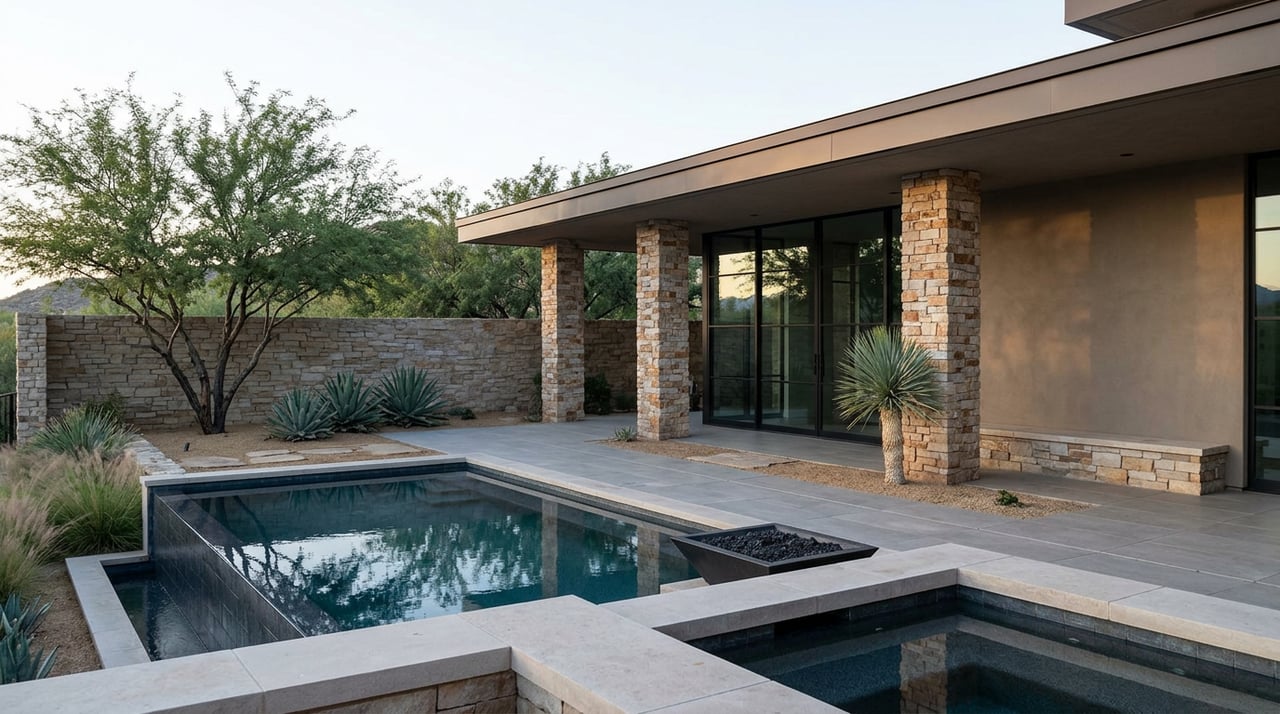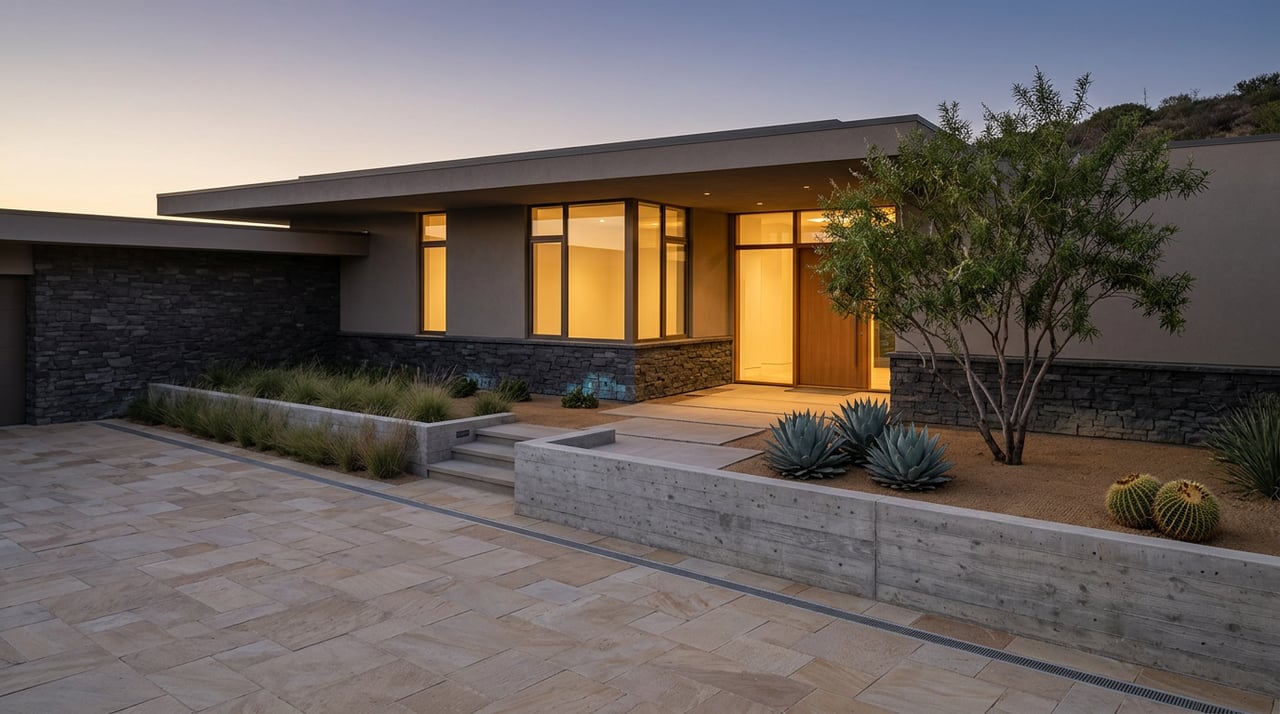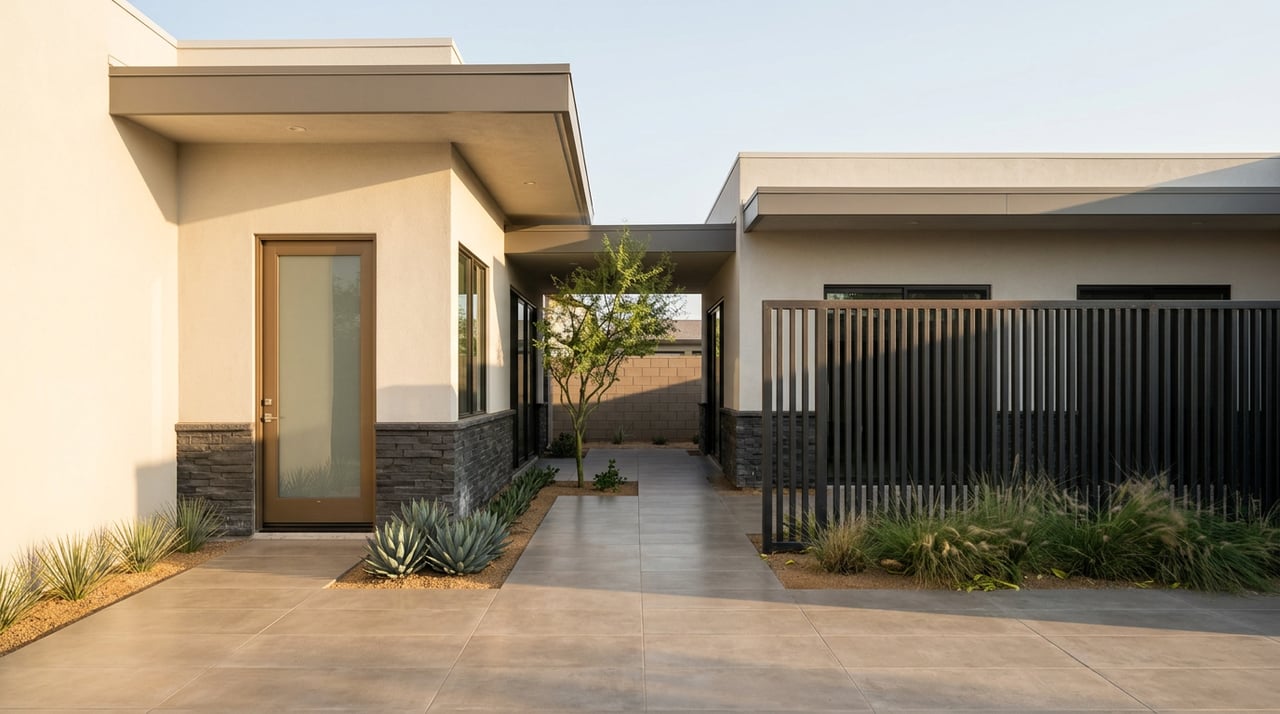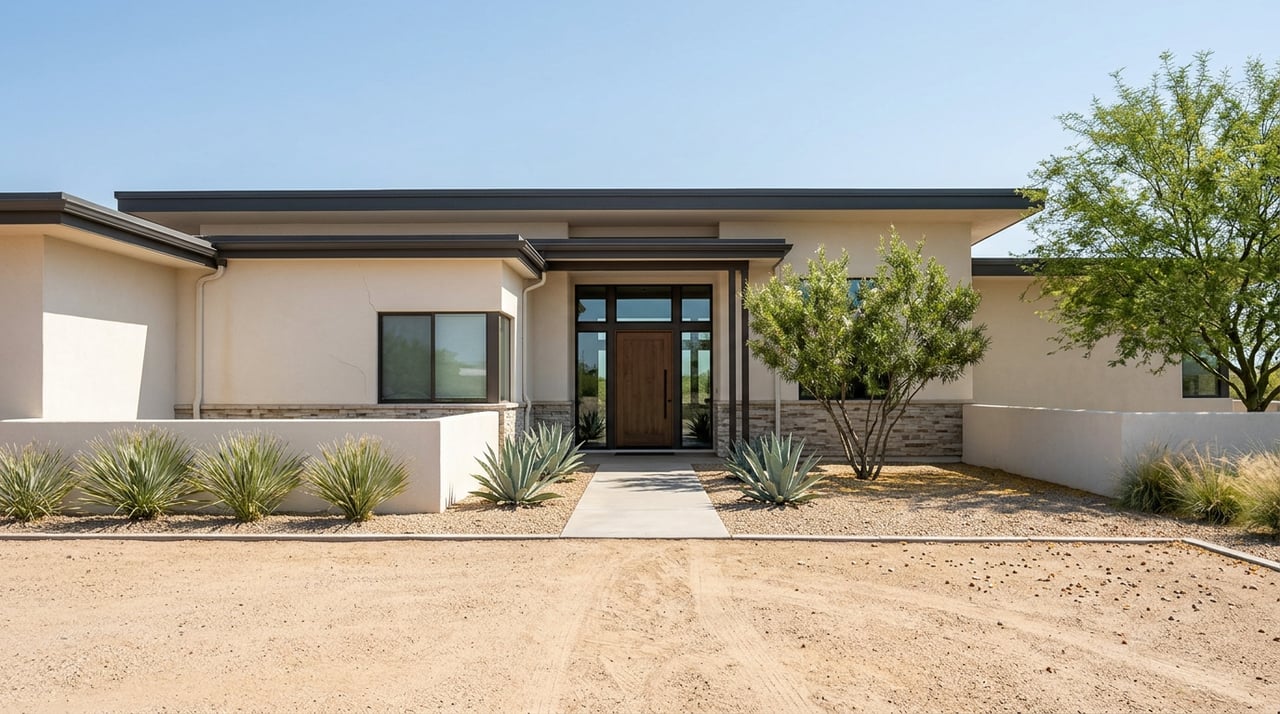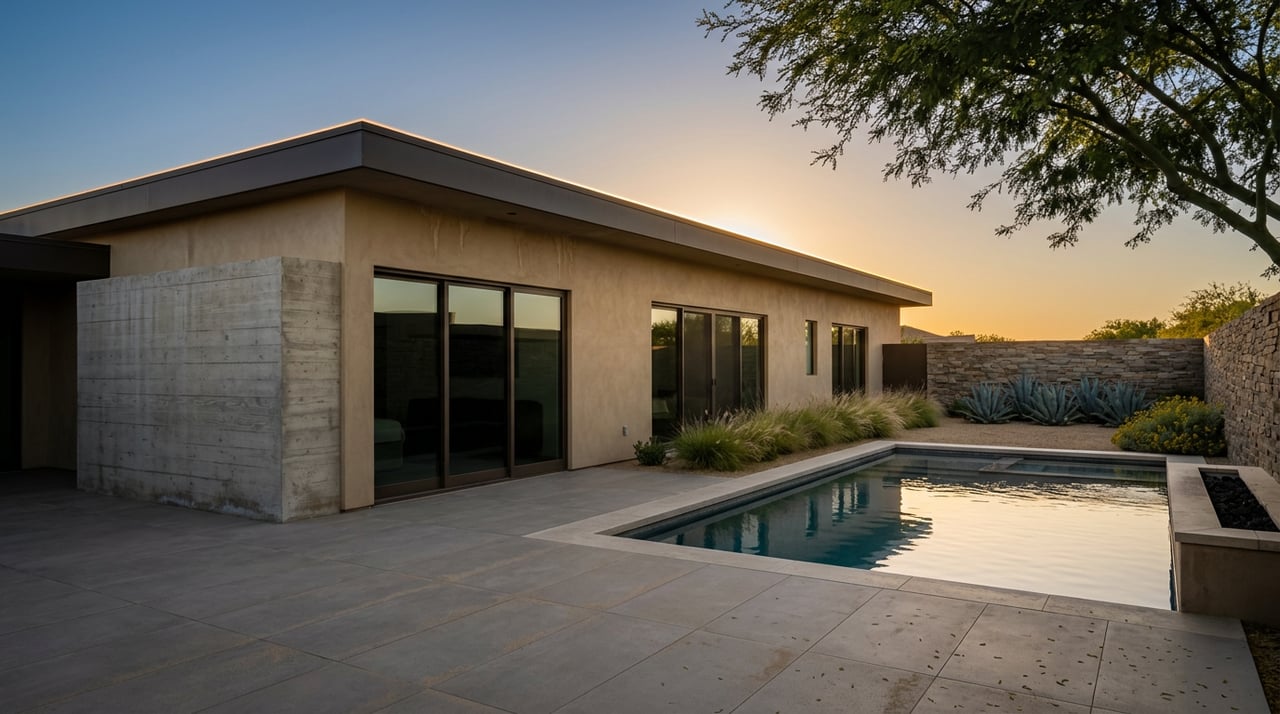
A 2.1-acre parcel on the north side of Lone Mountain Road recently listed at $825,000. It has no water hookup, no power, a horse barn in one corner, and Rural Estate zoning that technically allows it to be split into two half-acre lots down the road, pending a buyer who wants to sort through Clark County's Title 30 code to confirm exactly how. A few miles south, inside a guard gate, a turnkey home on three-quarters of an acre closed in the same general window for well north of $3 million, fully landscaped, pool installed, home automation wired in from the builder.
Both properties are marketed under the same neighborhood name: Lone Mountain. A buyer who searches that name and anchors on a single median price is comparing two different products as if they were one. That gap, not the median itself, is the thing worth understanding before you tour anything out here.
One Name, Three Products
Lone Mountain the place refers to a 560-foot butte in the northwest valley and the roughly 3,000 homes that surround it. But "Lone Mountain" as a real estate search term covers three genuinely different products.
The first is raw acreage, zoned Rural Estate, scattered through the area without HOA oversight. These parcels appeal to buyers who want horses, space, or room to build without a design review committee looking over their shoulder. The tradeoff is that utilities are not guaranteed. Some lots have municipal water and power already run to the property line. Others do not, and a buyer has to confirm that parcel by parcel before assuming a build timeline.
The second product is the tract-built subdivisions that make up the bulk of the area's home count. Builders including Spinnaker, KB Home, Lennar, and D.R. Horton built ranch and two-story homes here from the 1990s through the early 2000s, typically in the $300s to $400s. This is the inventory that drives most of the volume in any median calculation for the wider neighborhood.
The third product is The Estates at Lone Mountain, a 35-acre guard-gated enclave built by Templeton Development Corp at the south base of the mountain. It holds somewhere between 160 and 200 custom and semi-custom homes on lots ranging from roughly 0.4 to 1.5 acres, most built between 1996 and 2010, with a handful of custom infill completed since 2018. Mediterranean and Tuscan styles dominate here, a signature of the era it was largely built in and the fact that individual custom builders worked each lot under HOA architectural guidelines rather than one master builder repeating a plan set.
Three products, one name, wildly different price points and wildly different financing paths.
The Median Depends on Which One You're Counting
That blend shows up directly in the data. As of July 2026, Zillow's home value index for Lone Mountain put the average home value at $443,442, down 2.0 percent over the prior year. As of June 2026, Homes.com reported a median sale price of $460,000, up 6 percent year over year for the same general area.
Same neighborhood name, same general season, two different directions. Neither figure is wrong. They are almost certainly weighting the underlying mix of raw land, tract resale, and Estates sales differently, and any month with a handful of Estates closings can swing the average portion of that math meaningfully since those homes sell in the seven figures while most of the surrounding inventory sells in the $300,000 to $500,000 range.
For context, Las Vegas REALTORS reported a valley-wide median single-family price of $465,000 in March 2026. If you are comparing Lone Mountain to that citywide figure, you need to know which Lone Mountain you are pricing against it, because the tract-home layer trades close to that valley median while The Estates trades at a multiple of it.
What a Half-Million Buys You Depends on the Gate
Inside The Estates, price moves on three variables: lot size, view orientation, and remodel vintage, and the spread between them is wide enough to change a buyer's entire budget conversation.
| Configuration | Typical 2026 Price |
|---|---|
| 4,200 sq ft, 0.45-acre interior lot, 2003 build, original kitchen | $1.1M to $1.35M |
| Same footprint, 0.85-acre view lot, 2022 down-to-studs remodel | $1.8M to $2.4M |
| 6,500+ sq ft, acre-plus lot, mountain view, recent build | $3M and up, with a 2025 closing at $3.85M setting the recent ceiling |
View premiums alone add roughly $180 to $280 per square foot for a true mountain-facing lot compared to an interior parcel, and single-story configurations carry an added premium of $75 to $130 per square foot over two-story plans of similar size, a pattern that tracks with the 55-plus buyer mix that gravitates toward this community. A pool and spa combination typically adds another $90,000 to $180,000 over a comparable home without one.
The newest activity inside the gate is a second, smaller enclave called Area 5, built by Blue Heron under Templeton Development Corp. It holds nine half-acre lots and offers three architectural plans, a single-story layout called Virga and two two-story plans named Spire and Eclipse, each available in two elevations and three interior design finishes. Homes here run 3,800 to just over 5,000 square feet and are sold turnkey, landscaping, pool, and home automation included at one price with no markup layered on after signing.
This is the detail that gets lost in a single median: someone shopping "Lone Mountain" in 2026 could be looking at a $340,000 tract resale, an $825,000 raw parcel with no utilities yet, or a $3.8 million turnkey estate, all under the same neighborhood label.
The Friction That Shows Up at the Lender's Desk
The three products don't just diverge on price. They diverge on how a purchase actually gets financed and closed.
Almost every purchase inside The Estates lands above the 2026 conforming loan limit for Clark County, which the Federal Housing Finance Agency set at $766,550. That pushes the transaction into jumbo territory, which typically means 20 to 25 percent down, a credit score of 740 or higher, and six months of reserves on hand. Underwriting on a jumbo loan commonly takes 21 to 35 days, noticeably longer than the 12 to 18 days typical of a conforming loan, which matters if you are writing an offer with a tight contingency window.
Raw acreage buyers face a different kind of friction. Because parcels sit outside a platted subdivision, water and power are not guaranteed to be at the lot line, and a buyer needs to confirm both before treating any build timeline as fixed. Rural Estate zoning also allows for subdividing down to half-acre parcels in some cases, but that requires verifying the specific rules under Clark County's Title 30 code rather than assuming it. Water supply itself is a point of quiet variation across the area. The Estates sits on municipal supply through the Las Vegas Valley Water District, while some of the surrounding custom pockets outside the gate rely on private wells, a distinction worth confirming before a buyer assumes utility costs will look the same on both sides of the fence.
What This Means If You're Comparing Neighborhoods
If you're comparing Lone Mountain against Summerlin or another master-planned community on price alone, make sure you know which Lone Mountain product you're actually pricing. A tract resale in the $300s is not competing with Summerlin's flagship villages. The Estates is, and it does so at a real discount, trading at roughly 17 percent below comparable square-footage and lot combinations in Summerlin's 89135 zip code based on a 2025 comparison of closed sales. For a 5,200-square-foot home on a half-acre lot, that gap translates to $300,000 to $425,000 in front-end savings, which is meaningful money for a buyer who still wants the acreage, the privacy, and the mountain views without paying Summerlin's premium for them.
If you're drawn to the raw land side of the market instead, the discipline is different. Confirm utilities before you fall in love with the view, verify zoning capacity if subdividing is part of your plan, and budget time for both, since neither moves as fast as a platted subdivision closing.
FAQ
Is all of Lone Mountain gated? No. The Estates at Lone Mountain and its Area 5 sub-phase are guard-gated. The surrounding tract subdivisions and raw acreage parcels generally are not, though some individual pockets carry their own smaller gates or HOAs.
Does every property here allow horses? Not automatically. Horse-keeping allowances run with the specific parcel's zoning, and Rural Estate designation is what typically permits it. A buyer should verify horse rights on a given lot rather than assume the broader Lone Mountain reputation for equestrian living applies everywhere.
Why do home value estimates disagree so much for this neighborhood? Because the underlying sales mix changes month to month. A handful of seven-figure Estates closings can pull an average upward even as tract-home resales soften, and different data providers weight that mix differently, which is exactly why the median alone is the wrong number to shop by here.
If you're weighing a raw parcel against a turnkey estate, or trying to figure out what your equity actually buys once you cross into The Estates, that's a conversation worth having before you tour rather than after you fall for a view. Darin Marques Group works this market regularly and can walk you through which Lone Mountain fits your plan, your timeline, and your financing. Contact us to start that conversation, or take a look at our buyer's guide for the broader groundwork before you make an offer.